
The New Supply Chain Imperative for the Gulf
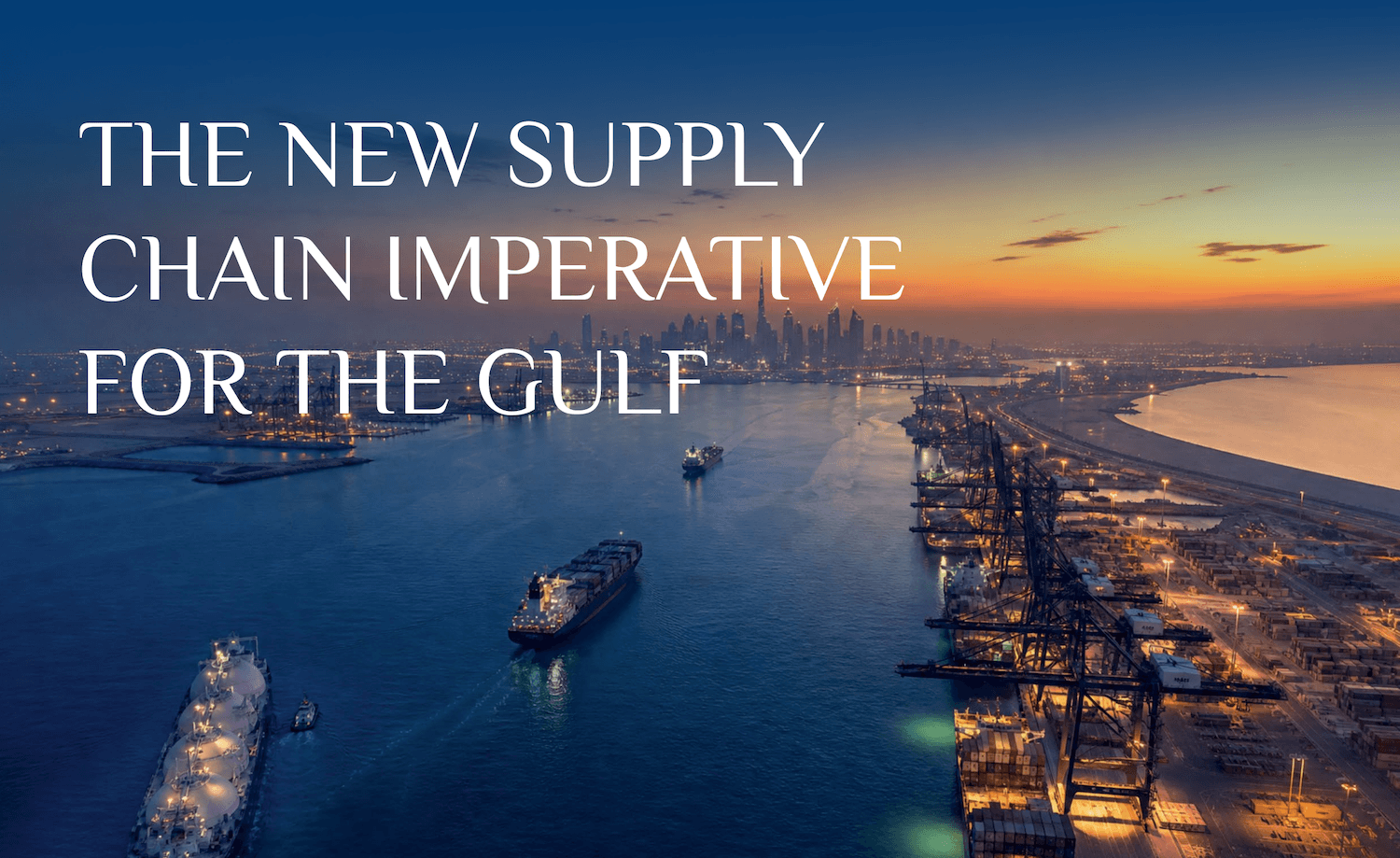
Building a fully integrated, resilient, multimodal supply chain infrastructure network is among the most consequential national security investments the GCC can make this decade. More than USD 1.5 trillion in GCC trade passes through the critical maritime chokepoints of the Strait of Hormuz, Bab el-Mandeb and the Suez. This strategic white paper sets paper out an actionable roadmap to strengthen regional connectivity, diversify critical trade routes and ensure the uninterrupted flow of goods and energy—under even the most severe geopolitical and operational disruption.
Download White Paper Read Executive Summary
About the GCC Supply Chain Resilience White Paper
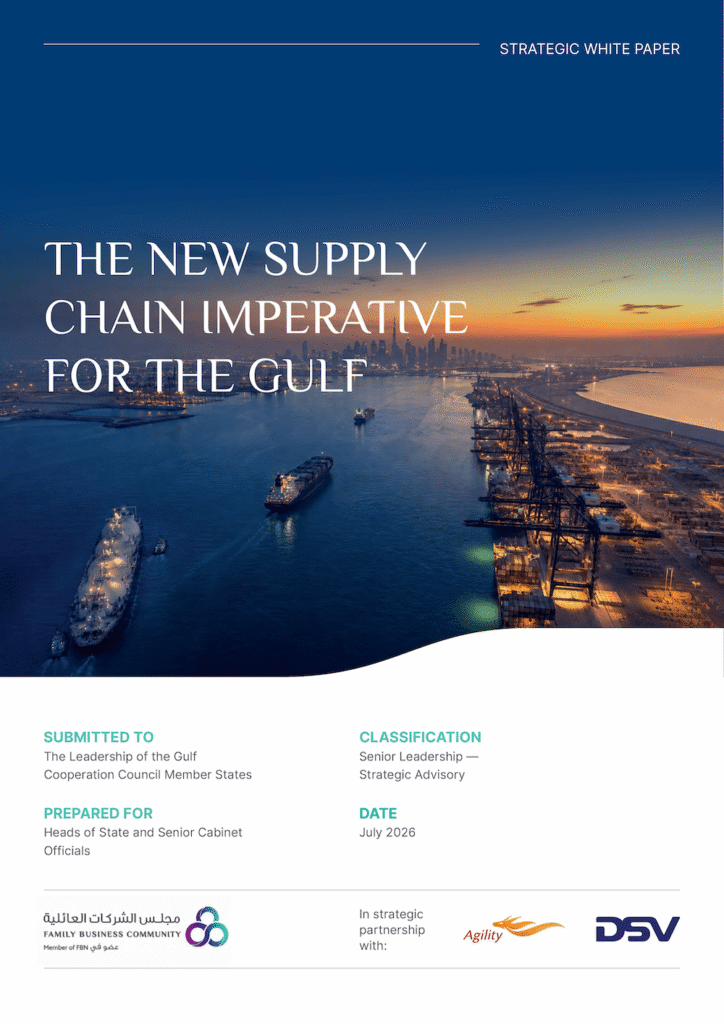
The white paper assesses GCC supply chain vulnerability across multiple strategic dimensions, spanning chokepoint exposure, energy and water security, transport infrastructure, critical-goods continuity, cross-border harmonisation and crisis governance. It combines quantified disruption scenarios with clear resilience standards, implementation priorities and phased investment recommendations.
Developed by the Family Business Community, Agility, DSV and leading Gulf private-sector contributors, the paper draws on the operational expertise of companies that collectively generate USD 70 billion in annual revenue and employ 350,000 people. Its recommendations include N-2 redundancy for critical infrastructure, distributed strategic reserves, accelerated border processes, pre-authorised freight corridors, and coordinated legal, insurance and commercial-continuity frameworks.
Why the Gulf's Supply Chain Can't Wait
Three critical maritime chokepoints. US$1.5 trillion in exposed trade flows. Watch why building a resilient, integrated supply chain is the Gulf's most urgent national security investment.
Key Highlights
Maritime Chokepoints at Risk
Hormuz, Bab el-Mandeb and Suez are critical yet increasingly exposed trade gateways.
Annual Trade at Stake
In annual GCC trade flows exposed to supply chain disruption.
Programme Investment
Estimated investment required to deliver the full resilience programme over 15 years.
Power Security
Redundant national power generation costs avoidable through a fully integrated GCC electricity grid.
Crude Oil Bypass Capacity
Additional bypass capacity under development or discussion.
Critical Goods Continuity
Minimum strategic reserve for critical food, water-treatment inputs and distributed fuel supplies; 180 days recommended supply coverage for the 500 most critical medicines and medical products.
Accelerated Customs Procedures
Estimated bilateral trade volume lost for every additional day of border delay.
Get Full Report
Unlock the comprehensive strategic analysis and phased investment roadmap by downloading the full white paper. Learn how the GCC can build an integrated supply chain architecture that deters economic coercion, secures trade flows, and positions the region as a global leader in connected, resilient logistics.